 |
| This elegant display is the result of a neglected sage plant that has been allowed to flower. When I trimmed it, I thought these were worthy of a photo. And they smell like Thanksgiving! (click to see another use for this "vase") |
Showing posts with label herbs. Show all posts
Showing posts with label herbs. Show all posts
Sunday, May 26, 2013
Sunday centerfold


Monday, April 22, 2013
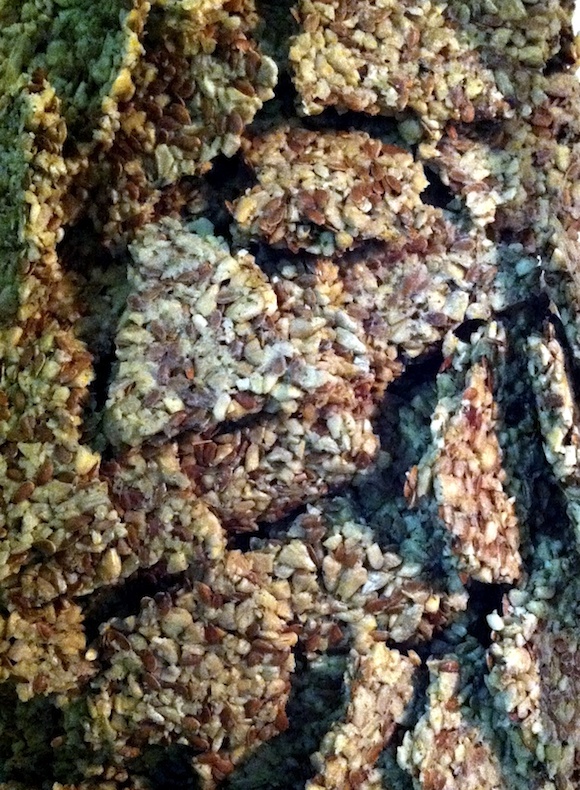
The amazing flourless cracker
Fresh herbs are one of the easiest and tastiest things to grow, but many people forget they can also be dried and enjoyed year-round.
99% of the time, I used my dried herbs (mainly oregano, rosemary, thyme, and basil) in some form of tomato sauce or soup, but occasionally something else catches my eye. Last week I concocted the following snack, which is an adaptation of a recipe I found online. These have been pretty popular in my house, by which I mean I ate a few and my husband happily devoured the rest of the batch over the course of a few days. They are great dipped in hummus.

Flourless Flax Crackers*
(this version packs a pretty strong Italian flavor. Feel free to reduce the amount of any of the seasonings)
2 cups raw sunflower seeds
1/2 cup flax seeds
1 tsp salt
fresh ground pepper to taste
1 tsp garlic powder
1-1/2 tsp dried oregano
1-1/2 tsp dried basil
1. Preheat over to lowest temperature (mine is 170 degrees)
2. Combine flax seeds with 1/2 cup water in a bowl and allow to soak for 1 hour (until you have a weird gooey mass.)
3. Place sunflower seeds and all seasonings in the bowl of a food processor and pulse until finely chopped.
4. Add gooey flax mess to sunflower mixture, and pulse until combined.
5. Line a baking sheet (for me this just about filled a sheet pan) with parchment.
6. Spread mixture in a thin layer onto parchment.
7. Bake in the lowest temperature your oven has to offer for 3-4 hours.
8. Once they have baked for a while the crackers solidify into one big sheet. Lift this with a spatula and check to see if the crackers are crisp. If you seek adventure, try to flip this over.
9. Bake for another hour or so.
10. Turn off oven and allow crackers to stay in it overnight, continuing to dry.
11. When cool, break into pieces and enjoy! (I tried to cut these into neat squares but ended up just breaking it all into shards)
*Cooking times will obviously vary depending on your oven and how low it can go. If you happen to have a food dehydrator, follow the link to the original recipe above.
99% of the time, I used my dried herbs (mainly oregano, rosemary, thyme, and basil) in some form of tomato sauce or soup, but occasionally something else catches my eye. Last week I concocted the following snack, which is an adaptation of a recipe I found online. These have been pretty popular in my house, by which I mean I ate a few and my husband happily devoured the rest of the batch over the course of a few days. They are great dipped in hummus.
Flourless Flax Crackers*
(this version packs a pretty strong Italian flavor. Feel free to reduce the amount of any of the seasonings)
2 cups raw sunflower seeds
1/2 cup flax seeds
1 tsp salt
fresh ground pepper to taste
1 tsp garlic powder
1-1/2 tsp dried oregano
1-1/2 tsp dried basil
1. Preheat over to lowest temperature (mine is 170 degrees)
2. Combine flax seeds with 1/2 cup water in a bowl and allow to soak for 1 hour (until you have a weird gooey mass.)
3. Place sunflower seeds and all seasonings in the bowl of a food processor and pulse until finely chopped.
4. Add gooey flax mess to sunflower mixture, and pulse until combined.
5. Line a baking sheet (for me this just about filled a sheet pan) with parchment.
6. Spread mixture in a thin layer onto parchment.
7. Bake in the lowest temperature your oven has to offer for 3-4 hours.
8. Once they have baked for a while the crackers solidify into one big sheet. Lift this with a spatula and check to see if the crackers are crisp. If you seek adventure, try to flip this over.
9. Bake for another hour or so.
10. Turn off oven and allow crackers to stay in it overnight, continuing to dry.
11. When cool, break into pieces and enjoy! (I tried to cut these into neat squares but ended up just breaking it all into shards)
*Cooking times will obviously vary depending on your oven and how low it can go. If you happen to have a food dehydrator, follow the link to the original recipe above.
Friday, August 24, 2012
Herbs, part IV
For those of you who have cats, or know a cat, one essential and super-easy-to-grow herb is catnip.
You can use the same drying method that I detailed yesterday, but our cats also enjoy this stuff fresh. It can apparently be used for cooking, but I find the smell of it to be pretty awful so I don't think I'll be trying that. I will leave it for the pets.
I grew this particular plant from seed - planted in March, it grew on a windowsill with some help from a lamp until the weather got warm.

I moved it into a bigger pot that is currently on our deck. The only downside of keeping it outdoors is that it does seem to serve double-duty as a snack for our cats and for whoever wanders by at night.
Like many other herbs, catnip will flower and you want to make sure to pick the flowers off or trim it back.
Considering how much this sells for in pet stores, and considering that it is much stronger when fresh, it has been very worthwhile for us to keep a catnip plant on hand. We have had no complaints.

I grew this particular plant from seed - planted in March, it grew on a windowsill with some help from a lamp until the weather got warm.

I moved it into a bigger pot that is currently on our deck. The only downside of keeping it outdoors is that it does seem to serve double-duty as a snack for our cats and for whoever wanders by at night.
Like many other herbs, catnip will flower and you want to make sure to pick the flowers off or trim it back.
Considering how much this sells for in pet stores, and considering that it is much stronger when fresh, it has been very worthwhile for us to keep a catnip plant on hand. We have had no complaints.

Thursday, August 23, 2012
Herbs, part III
Fresh herbs are wonderful to use when they are fresh, but many of them are equally good (or better) when dried. Two of my favorite herbs to dry are thyme and oregano. The flavor really intensifies in these when you dry them, and I find myself using them a lot in recipes during the colder months. Thyme pairs so well with mushrooms, which we eat a lot of, and oregano is a wonderful addition to any Italian or Mexican meal.
Here is my technique for drying herbs:
1. Pick the herbs, on stems if possible.
2. Wash.
3. Tie into a bundle and hang to dry.
4. Label a brown paper lunch bag with the name of the herb.
5. When the herbs have dried off (not dried out, but just dried off from the washing), place the bundle inside the paper bag.
6. Secure (you can use staples, paper clips, tape, more string.... whatever) so that the bundle can now still hang upside down, but contained in the bag.
7. Hang in a cool, dry place. My basement works great.
8. The secret of the bag is twofold: a) you can let it hang forever and it won't attract dust or spider webs or anything else gross. This is important because you can't really wash the herbs when they are dry (it kind of defeats the purpose of drying them out!), and b) the bag will catch any little pieces (especially handy with thyme).
9. When you are ready to use these herbs or place them into another container, you can just kind of crunch them in the bag until they fall off the stems, then pour it into your container of choice.
10. I am sure there is a time limit out there somewhere for dried herbs, but I've used them for a year with no loss of flavor or anything. Note that I am not a food scientist so this is perhaps not the best guideline to follow!
 |
| I recommend buying "Greek oregano," whether seed or transplant. It supposedly has the strongest flavor. |
Here is my technique for drying herbs:
1. Pick the herbs, on stems if possible.
2. Wash.
3. Tie into a bundle and hang to dry.
4. Label a brown paper lunch bag with the name of the herb.
5. When the herbs have dried off (not dried out, but just dried off from the washing), place the bundle inside the paper bag.
6. Secure (you can use staples, paper clips, tape, more string.... whatever) so that the bundle can now still hang upside down, but contained in the bag.
7. Hang in a cool, dry place. My basement works great.
8. The secret of the bag is twofold: a) you can let it hang forever and it won't attract dust or spider webs or anything else gross. This is important because you can't really wash the herbs when they are dry (it kind of defeats the purpose of drying them out!), and b) the bag will catch any little pieces (especially handy with thyme).
9. When you are ready to use these herbs or place them into another container, you can just kind of crunch them in the bag until they fall off the stems, then pour it into your container of choice.
10. I am sure there is a time limit out there somewhere for dried herbs, but I've used them for a year with no loss of flavor or anything. Note that I am not a food scientist so this is perhaps not the best guideline to follow!
Wednesday, August 22, 2012
Herbs, part II
Several years ago, while at the garden center, I made the random decision to purchase a tarragon plant. I had never used tarragon in a recipe but thought it might be nice to have on hand. These are the sorts of decision you make when plants are priced very low. Tarragon has a sort of licorice-y aroma and is popular in French cooking. Tarragon vinegar is a very common ingredient in salad dressing. Ina Garten uses tarragon quite a bit.
Much like the thyme plant we have, the tarragon grew rapidly and soon overtook the bed it was planted in. It was the first plant I uprooted and moved to another location, figuring since I kind of hadn't used it yet, there was no real risk. If it didn't make it, so what?
Several years later, the tarragon is flourishing.

It gets along well with its neighbors in the row of herbs I've planted and transplanted along my deck:
 I trim it back from time to time, as it grows like crazy. And I use it... hardly ever! If you have any good ideas (other than those I've linked above), please share!
It also appears to have multiplied. When I was cutting it back the other day I noticed that we seem to have five plants instead of just one:
 Which I am sure is an important biology lesson, but I'm not a botanist and have no idea how to explain it. What I know is that tarragon is bright green and healthy, smells nice, and apparently goes well with tomatoes. I welcome any other information!
Much like the thyme plant we have, the tarragon grew rapidly and soon overtook the bed it was planted in. It was the first plant I uprooted and moved to another location, figuring since I kind of hadn't used it yet, there was no real risk. If it didn't make it, so what?
Several years later, the tarragon is flourishing.

It gets along well with its neighbors in the row of herbs I've planted and transplanted along my deck:

It also appears to have multiplied. When I was cutting it back the other day I noticed that we seem to have five plants instead of just one:

Monday, August 20, 2012
Herbs, part I
This week begins a series of posts about herbs. I have the following growing in various locations in my garden and yard: thyme, basil, oregano, tarragon, sage, and parsley. Do you notice what is missing from that list? Cilantro. I would love, love to grow cilantro, but have never gotten more than a few leaves... which, granted, is enough to sprinkle on a salad or on top of a dinner... but when you've got 75% of the other ingredients for salsa growing outside, it sure would be nice to have enough for an actual recipe!
 That has totally not happened.
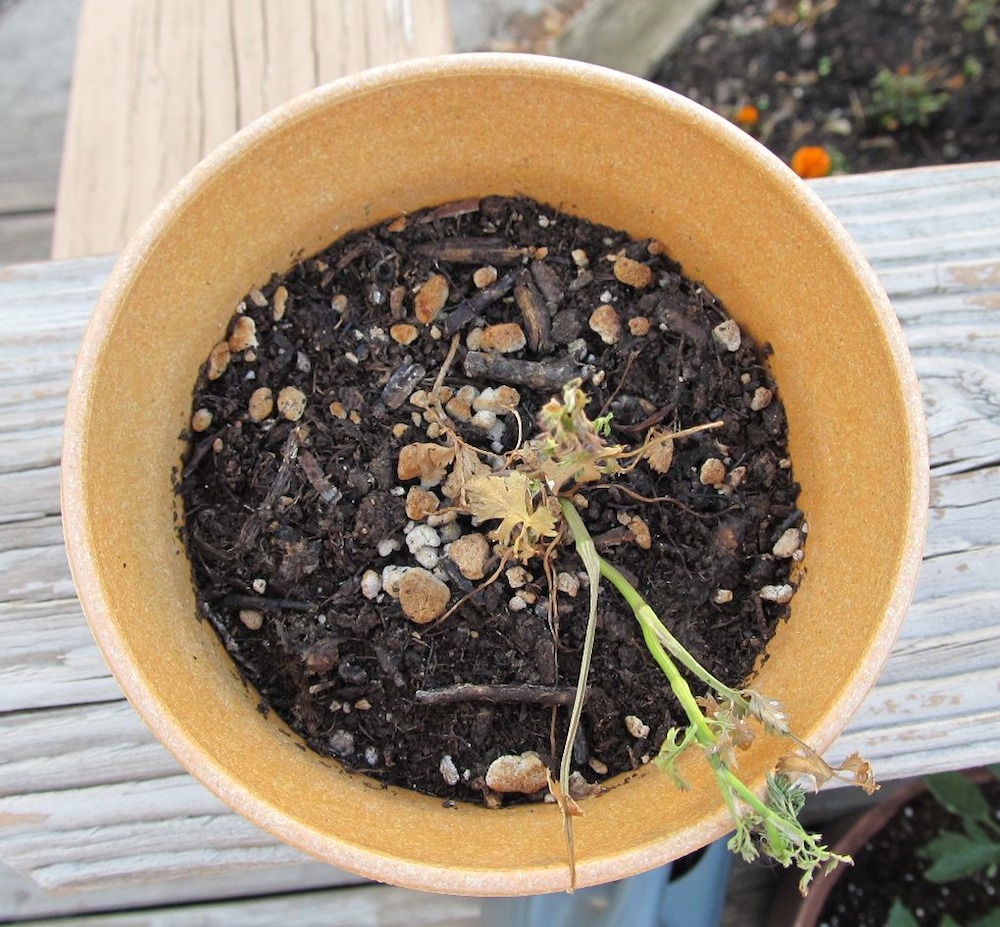
At this point in the summer, I've given up on the cilantro completely. It does not seem to do well in heat, and it "bolts" quickly - meaning, it goes from having flavorful leaves to producing seeds. The seeds are known as coriander.
They are not what I put in salsa.
Occasionally, the plants just do what this one did above, which is die. Pretty much, this endeavor is not worth the time and energy. So I'll keep paying 99 cents for a bunch of the stuff at the store or farmer's market!
At this point in the summer, I've given up on the cilantro completely. It does not seem to do well in heat, and it "bolts" quickly - meaning, it goes from having flavorful leaves to producing seeds. The seeds are known as coriander.
They are not what I put in salsa.
Occasionally, the plants just do what this one did above, which is die. Pretty much, this endeavor is not worth the time and energy. So I'll keep paying 99 cents for a bunch of the stuff at the store or farmer's market!
Friday, June 29, 2012
Friday Failures, Part 2
Do I even need to include text with this picture?


I planted these small pots of parsley and cilantro, thinking they'd be the perfect size to keep on the windowsill of the kitchen.
Turns out they were a tiny bit too big for the windowsill. And, oh yeah, not suitable for consumption.
(I have no explanation for why they are still sitting on my deck)
Fortunately, I have had a little more luck with cilantro planted into the ground... it is still a challenging little herb, though (more on that later).
Fortunately, I have had a little more luck with cilantro planted into the ground... it is still a challenging little herb, though (more on that later).
Thursday, June 28, 2012
Moving day.
Things were getting a little dicey in the Baltic Ave. raised bed. Namely, due to complete neglect on my part, the thyme got a tiny bit out of control...
It had basically become an aromatic, flowering shrub that was overtaking everything around it.
So, I did what any sensible person would do...
 |
| What you see in front is just some out-of-control asparagus. It got a haircut too. |
It had basically become an aromatic, flowering shrub that was overtaking everything around it.
So, I did what any sensible person would do...
Subscribe to:
Posts (Atom)